A timing belt problem rarely starts with obvious signs. It usually starts with a quiet unknown in the background, especially if you bought the car used, or you cannot remember the last time it was replaced. Then you hear one story about a belt breaking without warning, and suddenly you are wondering if you are driving on borrowed time.
The good news is you do not have to wait for a scare. If you know how timing belt intervals work, what factors shorten them, and what to replace while you are in there, you can handle it on your schedule instead of getting forced into it.
Timing Belt Vs Serpentine Belt
The serpentine belt is the one you can usually see. It runs accessories like the alternator and AC. If it fails, you may lose charging or cooling, but it is generally an external repair.
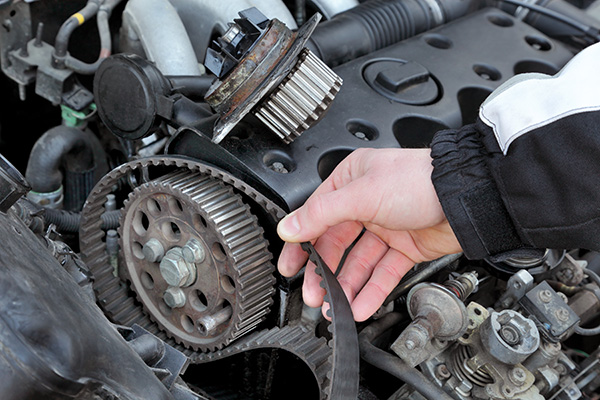
A timing belt is different. It lives behind covers and keeps the crankshaft and camshafts synced. That timing is what lets valves open and close at the right moment. If the belt slips or breaks, the engine can lose that coordination instantly. On many engines, that can mean internal damage because components collide when timing is lost.
How Manufacturers Set Timing Belt Replacement Intervals
The most reliable answer is always the service interval from the manufacturer. Timing belt intervals vary a lot by make, engine, and model year. Some are mileage-based, some include a time limit, and some have different intervals depending on driving conditions.
Time matters because rubber ages even when you do not drive much. Heat cycles, oil vapor, and normal material fatigue add up. That means a low-mile vehicle can still be overdue if the belt is old enough.
If you are not sure what engine you have or what interval applies, it is worth checking the owner’s manual or having the belt interval verified by VIN and engine code. It is a small step that can keep you from waiting too long or replacing it far earlier than you needed to.
Clues Your Timing Belt Service May Be Due Soon
Timing belts do not always give obvious warnings, but the car often gives hints that something in the timing belt system is aging. The key is paying attention to changes that keep repeating.
- Service records are missing, incomplete, or do not clearly mention a timing belt replacement
- The vehicle is near the recommended mileage interval, or past the time interval
- You hear a new chirping, light grinding, or rubbing noise from the front of the engine
- The engine has a coolant leak near the water pump area or timing cover area
- There is an oil leak that could contaminate rubber components over time
That last point matters more than people think. If oil gets into the timing belt area, belt life can be shortened because rubber does not like being soaked in oil.
What Can Happen If You Put It Off Too Long
This is where timing belts differ from many other maintenance items. If you delay brake pads, you usually get noise first and you still have time. With a timing belt, the first real symptom can be the moment it fails.
If the timing belt breaks, the engine will typically stall and will not restart. On interference engines, internal damage is possible because valves and pistons can make contact once timing is lost. Repairs can range from a belt service plus towing to major engine work if internal components are damaged.
Even if the belt does not break, a worn tensioner or idler pulley can fail and cause the belt to slip. That can create misfires, poor running, or no-start conditions. If the dashboard shows a check engine light and the vehicle also feels off, timing-related issues become one part of what should be checked.
Timing Belt Replacement
Timing belt service is not just the belt. The belt is the headline, but the supporting parts are often what determine whether the repair lasts.
Here are common items that are often handled during the same service, depending on the engine design:
- Tensioner and idler pulleys, because worn bearings can fail and take the belt with them
- Water pump, since it may be driven by the belt and is difficult to access later
- Front crank and cam seals if there is any sign of seepage
- Coolant service and proper bleeding if the water pump is replaced
- Related drive belts if they show age or cracking, while everything is accessible
We have seen cases where a belt was replaced, but an old tensioner was left behind and became the next weak link. Replacing the system as a system is usually what prevents repeat labor and repeat worry.
A Simple Timing Belt Decision Guide for Real Life
If you have proof that the timing belt was replaced recently and the interval is still far away, you can likely stay on the normal schedule. If the history is unknown and the car is near the typical interval, it is usually safer to treat it as due and plan the service.
If you are past the interval, or you are dealing with coolant or oil leaks near the timing belt area, it is smart to move it up the list. Waiting rarely improves the outcome, and timing belt service is one of those repairs where planning ahead almost always feels better than reacting.
Get Timing Belt Service in San Francisco, CA, with Taylormade Automotive
We can verify the correct timing belt interval for your vehicle, inspect for related leaks or worn components, and handle the full timing belt service the right way. We’ll replace the belt system components that matter so you can drive without that nagging what-if in the back of your mind.
Call Taylormade Automotive in San Francisco, CA, to schedule timing belt service and protect your engine from an avoidable failure.