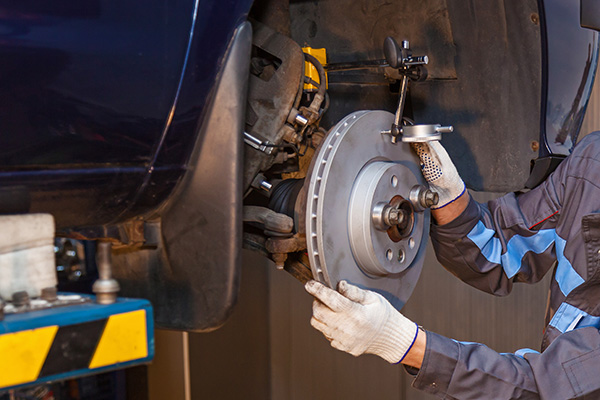
A brake shake gets your attention because it changes the whole feel of the car. You press the pedal, and the steering wheel starts trembling, the seat shakes, or the front end feels unsettled in a way it did not before. Plenty of drivers notice it first at highway speeds, then start feeling it more and more during normal driving.
That is usually a sign that the braking system is no longer applying force evenly.
Why Brake Shake Usually Starts At The Front
Most of your stopping power happens at the front wheels, so that is where brake vibration tends to show up first. When the front rotors develop uneven thickness, heat spots, or pad material builds up unevenly on the surface, the pads stop gripping the rotor the same way on every rotation. Instead of one smooth stop, you get a repeated pulse that travels into the steering wheel and front suspension.
Most people call the issue warped rotors, and sometimes that is close enough for everyday conversation. Once you bring your car to us at the shop, the real cause is more specific. Uneven rotor wear, overheating, or brake parts that are not moving freely will all create the same kind of shake when you press the pedal.
The Rotors Are Not Always The Whole Story
It is easy to blame the rotors and stop there, but brake shake is not always just a rotor problem. Brake pads that are wearing unevenly, caliper slide pins that are sticking, or a caliper that is not releasing correctly can all create the same uneven braking feel. One side grabs harder, the other side lags a little, and the whole front end starts feeling rough under braking.
This is one reason a quick parts swap does not always fix it. The system has to be looked at as a whole. A proper inspection should confirm whether the issue is the rotor surface, the pad wear pattern, the caliper movement, or a combination of all three.
Suspension And Tire Problems Can Make It Worse
Sometimes the brakes are the trigger, but not the entire problem. Worn control arm bushings, loose tie rods, tired ball joints, or weak struts will let the front end move more than it should when weight shifts forward under braking. That extra movement turns a mild vibration into something much easier to feel through the wheel and body.
Tires can add to the confusion, too. A tire with uneven wear, internal damage, or a balance issue may not feel terrible while cruising, then become much more noticeable when braking. That is why a car that shakes when braking deserves more than a quick glance at the pad thickness.
What The Pattern Usually Tells You
The way the shake happens usually gives useful clues before the car even goes on the lift.
- A steering wheel shake usually points toward the front brakes or front suspension
- A pulsing brake pedal often points toward uneven rotor contact
- A full vehicle shudder can suggest rear brake or tire issues, too
- A vibration that is strongest at highway speeds usually points toward heat or rotor surface problems
Those clues do not replace testing, but they do help narrow the search. A shake during gentle neighborhood stops is a little different from one that only shows up when braking from 65 mph on the freeway.
Heat Is Usually What Pushes The Problem Along
Brake vibration rarely appears out of nowhere. Heat is usually part of the story. Repeated hard stops, downhill driving, heavy traffic, and worn parts that are already dragging will all raise brake temperatures. Once that happens, rotor surfaces change, pad deposits build unevenly, and the system stops working with the smooth, even contact it should have.
That is why the problem tends to get worse instead of staying the same. The extra heat and uneven contact keep feeding each other. What starts as a slight wobble in the wheel can turn into a much rougher stop a few weeks later.
Why It Is Better To Fix It Early
A brake shake is not just annoying. It usually means the system is already wearing unevenly, and that uneven wear spreads. Pads wear faster, rotors get worse, and any loose or tired front-end parts get stressed harder every time the brakes are applied.
That is where regular maintenance really helps. Catching the issue early gives you a better chance of fixing the actual cause before the repair grows into pads, rotors, suspension wear, and tire problems all at once. The sooner the source is found, the more straightforward the repair usually is.
What A Proper Brake Check Should Include
A good brake vibration check should cover rotor condition, pad wear, caliper operation, brake hardware, front-end movement, and tire condition. The goal is not just to stop the shake for now. It is to fix the reason the car started shaking in the first place.
That is why brake shake should not be guessed at. A focused inspection tells you whether the problem is really in the brakes, in the front suspension, or in the way those systems are reacting together under load.
Get Brake Repair In San Francisco, CA, With Taylormade Automotive
If your car shakes when you brake, Taylormade Automotive in San Francisco, CA, can find the source of the vibration and fix it before the problem spreads into more brake and front-end wear.
Bring it in while the shake is still a warning sign and not a much bigger repair.