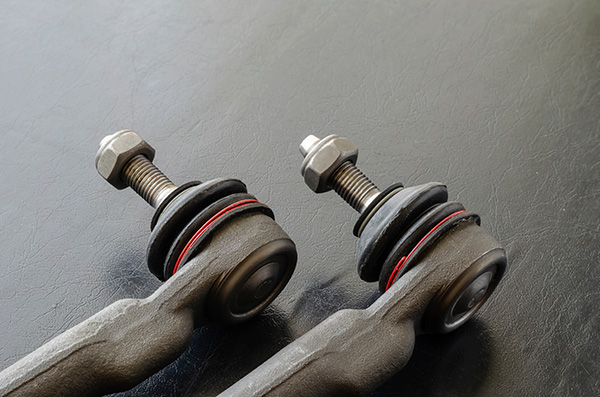
A ball joint doesn't have to make the wheel visibly wobble before it deserves attention. You might first hear a dry creak while parking, notice a torn boot during tire service, or find that steering no longer returns as freely as it once did. Don't dismiss any of those findings just because the joint still feels tight.
The question is what tight means in that particular design. A sound joint, a dry joint beginning to bind, and a worn joint held under spring load can feel very different when tested correctly. Waiting for obvious looseness can miss the earlier problem.
A Joint Can Become Stiff Before It Becomes Loose
A ball joint must pivot while keeping the wheel assembly located. Lubrication and protected bearing surfaces let it do that without binding. When contamination or corrosion affects those surfaces, movement can become rough or stiff even before substantial clearance develops.
That condition can produce creaking, popping, or increased resistance as the suspension and steering move. Rubber bushings, strut bearings, and steering components can produce similar sounds, so a creak alone doesn't identify the joint. Check the component for abnormal movement or binding rather than replacing it just because the noise is nearby.
A Damaged Boot Changes What Needs Checking
The dust boot keeps lubricant in and road contamination out. A split, a displaced seal, or a damaged retaining area leaves the joint more exposed. Fresh grease around a damaged boot also deserves context, particularly on a joint that has recently been serviced.
An inspection should establish whether the joint has admitted contamination and what the manufacturer requires when the boot is damaged. Some designs allow specific boot service; others require replacing the assembly. Applying grease to the outside or fitting a cover over existing corrosion won't restore damaged internal surfaces. A tight joint isn't automatically reusable.
Suspension Load Can Hide or Exaggerate Movement
How the vehicle is supported changes the force acting on a ball joint. On some suspensions, spring load can hold a worn joint firmly enough to mask play. On others, the wrong lifting position can make normal movement appear suspicious. No single wheel-shaking procedure works for every design.
At our shop, the support points and test method follow the vehicle's service information. Where required, a dial indicator measures movement in a specified direction. We compare that reading with the applicable limit, not a universal amount remembered from another vehicle. The measurement is only useful when the suspension is supported correctly.
Tire Wear and Steering Feel Support the Diagnosis
A joint that no longer controls wheel position accurately can contribute to uneven tire wear or inconsistent steering. A dry or binding joint can affect steering movement in a different way. These are supporting symptoms, not a reliable way to identify the failed joint from the driver's seat.
Compare the concern with other possible causes before approving parts. A low tire, a worn control arm bushing, or a strut bearing can create overlap. Report whether the change happens while parking, after the car has warmed up, or over uneven pavement. That description helps the technician reproduce the complaint without assuming every tire-wear pattern means ball joints.
A Replacement Recommendation Should Have a Reason
Ask what finding makes replacement necessary. An out-of-limit measurement, verified binding, significant corrosion, or a damaged seal with contamination is more useful than being told the joint looks old. Some designs have wear indicators, but you must interpret them by following the service procedure rather than appearance alone.
The repair may involve a single joint or a complete control arm, depending on how the parts are built and serviced. Mounting fit, fastening requirements, and alignment also need attention. Replacing the joint without correcting a loose mounting bore or damaged surrounding component can leave the wheel-control problem unresolved.
Don't Wait for the Wheel to Feel Unstable
A severely worn ball joint can separate and compromise wheel control. There is no benefit in waiting for a small, confirmed defect to produce a much more obvious symptom. If steering suddenly becomes loose, a wheel changes position, or the vehicle feels unstable, stop driving and arrange transport.
Regular maintenance checks offer a useful opportunity to compare condition before severe play develops. Greaseable joints need the specified service, while sealed joints aren't serviceable by adding grease or puncturing the boot. The right decision comes from the joint's condition and the correct test, not from a fixed replacement mileage.
Get Ball Joint Service In San Francisco, CA, With Taylormade Automotive
Taylormade Automotive in San Francisco, CA, can check joint movement, protective boots, steering behavior, and the measurements that determine whether replacement is due.
Contact us to schedule a suspension check and review the evidence behind the recommended repair.